Review Article / 종설

문신(Tattoo)에 관한 펍메드(PubMed) 연구 동향 (2006–2025): 키워드 공출현 분석을 통한 합산적 내용분석을 중심으로

곽도원1,*https://orcid.org/0009-0000-3156-4368, 권지수1https://orcid.org/0009-0001-1971-4981, 이재현2https://orcid.org/0009-0009-6696-5300, 이승철3https://orcid.org/0009-0009-6166-615X, 김재돈4https://orcid.org/0009-0009-2447-3156, 김서영5https://orcid.org/0009-0003-8043-2144, 조은희6https://orcid.org/0009-0004-8192-5888, 추홍민7https://orcid.org/0000-0003-0171-0234, 장인수8https://orcid.org/0000-0001-7885-1292
Dowon Gwak1,*https://orcid.org/0009-0000-3156-4368, Jisoo Kwon1https://orcid.org/0009-0001-1971-4981, Jaehyun Lee2https://orcid.org/0009-0009-6696-5300, Seungchul Lee3https://orcid.org/0009-0009-6166-615X, Jaidon Kim4https://orcid.org/0009-0009-2447-3156, Seoyeong Kim5https://orcid.org/0009-0003-8043-2144, Eunhee Cho6https://orcid.org/0009-0004-8192-5888, Hongmin Chu7https://orcid.org/0000-0003-0171-0234, Insoo Jang8https://orcid.org/0000-0001-7885-1292
Author Information & Copyright
1광진경희한의원 (원장)
2윤빛한의원 (원장)
3이루다한의원 (원장)
4다래한방병원 (원장)
5서울특별시한의사회 의료기기위원회 (위원)
6가로세로한의원 강남 (원장)
7원광대학교 광주한방병원 한의뇌졸중중점연구센터 (연구원)
8우석대학교 한의과대학 한방내과학교실 (교수)
1Gwang-jin Kyung-hee Korean Medicine Clinic
2Yoonbit Korean Medicine Clinic
3Iruda Korean Medicine Clinic
4Darae Korean Medicine Hospital
5Medical Device Committee, Seoul Korean Medicine Association
6Garosero Clinic of Korean Medicine, Gangnam
7Korean Medicine Convergence Research Information Center for Stroke, College of Korean Medicine, Wonkwang University
8Dept. of Internal Medicine, College of Korean Medicine, Woosuk University
*Dowon Gwak, Gwang-jin Kyung-hee Korean Mediicne Clinic, 653, Cheonho-daero, Gwangjin-gu, Seoul, Republic of Korea, (Tel : 02-3437-6799, E-mail : gkhclinic@gmail.com)

© 2026 the Society of Korean Medicine Ophthalmology & Otolaryngology & Dermatology. This is an Open-Access article distributed under the terms of the Creative Commons Attribution NonCommercial-ShareAlike License (http://creativecommons.org/licenses/by-nc-sa/3.0/) which permits unrestricted non-commercial use, distribution, and reproduction in any medium, provided the original work is properly cited.

Received: Jan 12, 2026 ; Revised: Jan 31, 2026 ; Accepted: Feb 07, 2026

Published Online: Feb 26, 2026

Abstract

Background: Tattooing has become increasingly prevalent worldwide, accompanied by growing medical concerns regarding adverse reactions, toxicological safety, therapeutic applications, and removal techniques.

Objective: This study aimed to identify and synthesize the principal research topics in medical literature on tattooing over the past two decades using keyword co-occurrence analysis.

Methods: PubMed was searched for tattoo-related publications published between January 1, 2006 and December 23, 2025. Bibliometric keyword co-occurrence analysis was conducted, followed by qualitative interpretation.

Results: A total of 1,131 publications were included. Nine thematic clusters were identified and categorized into three overarching research domains: (1) adverse effects and toxicology, (2) medical tattooing, and (3) laser tattoo removal.

Conclusions: Medical research on tattooing has largely focused on safety- and complication-related issues. These findings may inform clinical practice and policy discussions regarding ink quality standards, medical oversight, and informed consent.

Keywords: Tattoo review; Tattoo complications; Tattoo ink; Medical tattooing; Laser tattoo removal

Ⅰ. 서 론

문신(tattoo)은 전 세계적으로 확산되고 있는 신체 표식 행위로, 대중화와 함께 의학적 문제에 대한 관심도 증가하고 있다. 1) 문신은 피부에 외인성 색소를 주입하는 침습적 시술로서 감염, 알레르기 반응, 육아종성 염증, 사르코이드증 등 다양한 피부 및 전신 합병증과 연관될 수 있으며, 문신 잉크에 포함된 중금속이나 독성학적 우려도 제기되고 있다.2,3)

한편 문신은 미용 목적을 넘어 유방암 수술 후 유두–유륜 복합체 재건, 소화기 내시경 병변 위치 표시, 각막 색소침착술 등 의료 영역에서도 활용되고 있으며, 레이저를 이용한 문신 제거 역시 중요한 연구 주제로 다뤄지고 있다.4,5)

한국에서는 오랫동안 문신 시술이 의료행위로 간주되어 비의료인의 시술이 제한되어 왔으나, 2025년 9월 25일 문신사법 제정을 통해 제도적 전환을 맞이하였다.6,7) 이러한 변화는 문신과 관련된 의학적 쟁점과 연구 동향을 종합적으로 검토할 필요성을 더욱 부각시키고 있다.

그러나 기존 연구들은 개별 합병증이나 특정 시술 분야에 초점을 둔 경우가 많아, 문신 관련 의학 연구 전반의 주제 구조를 체계적으로 조망한 연구는 제한적이다. 특히 2025년 문신사법 시행을 앞두고, 문신 염료의 품질관리, 의료인의 역할, 시술 범위 설정, 부작용에 대한 사전 동의, 문신 제거 가능성 등에 관한 제도적 논의가 필요한 시점이다.

이에 본 연구는 의학 문헌 데이터베이스인 PubMed를 활용하여 최근 20년간 발표된 문신 관련 의학 문헌을 대상으로 키워드 공출현 분석을 기반으로 한 합산적 내용분석을 수행하여 주요 연구 주제와 동향을 도출하고, 이를 바탕으로 향후 제도 운영에 참고할 수 있는 의학적 근거를 제시하고자 한다.

Ⅱ. 연구방법

1. 분석방법

문신과 관련한 주요 주제를 확인하기 위해 합산적 내용분석(summative content analysis)8)을 수행하였다. 빈도 분석 단계에서 서지계량분석(biblio-metric analysis)9) 기법 중 하나인 키워드 공출현 분석(keyword co-occurrence analysis)10)을 활용하여 주요 키워드 및 클러스터를 도출하였고, 질적 분석을 통해 각 키워드 및 클러스터와 관련한 내용을 해석하였다. 또한 이상으로 분석한 내용을 종합하여 문신과 관련한 주요 주제군을 도출하였다.

2. 분석 자료

본 연구는 의생명과학 분야의 대표적인 문헌 데이터베이스인 PubMed에서 ‘문신’을 의미하는 키워드를 이용하여 최근 20년간(2006-2025년)의 문헌을 검색했으며, 구체적인 선별 방법은 다음과 같다(Table 1).

Table 1. Literature Search and Selection Criteria
Item Description
Search Database PubMed
Study Type All study types
Extracted Data Bibliographic information (title, abstract, author keywords, publication year)
Search Terms "tattoos"[Ti] OR "tattoo"[Ti] OR "tattooing"[Ti] OR "tattooed"[Ti] OR "tattooing"[MeSH]
Time Period January 1, 2006 - December 23, 2025
Download Excel Table

또한 추출데이터의 HTML 엔티티 코드를 해당 특수문자로 변환하여 텍스트를 정제하였다(예: Fin&# xe8;s → Finès).

3. 분석 절차
1) 키워드 공출현 분석

‘분석 자료’에 해당하는 자료 중 ‘저자 키워드’가 존재하는 자료들을 선별하여 키워드 공출현 분석을 시행하셨다. 구체적으로 VOSviewer (ver. 1.6.20; Leiden University)를 통해 5회 이상 등장하는 키워드에 대해 유사도 시각화(Visualization of Similarities, VOS)를 시행하였다.

사전작업으로는 ‘유사어 사전(thesaurus file)’ 설정 작업을 하였고,(부록 1) ‘tattoo’, 또는 ‘tattooing’과 같이 문신과 관련한 특정 키워드가 아닌 문신 자체를 의미하는 키워드 들은 제외하였다(부록 2).

결론적으로 ‘총 연결강도’ 기준 상위 키워드들과, 상호 연관강도가 높은 ‘클러스터’들을 추출하였다.

2) 주요 키워드 및 클러스터에 대한 질적 분석

이어서 합산적 내용분석의 질적 분석 단계를 수행하였다. 질적 분석은 제목과 초록을 대상으로 하였다. 초록 분석 방식은 대규모 문헌에 대한 분석방법으로 Ramos-Medina, Holmberg 등의 선행연구에서도 적용되어 그 효용성이 확인된 바 있다11,12).

3) ‘주요 주제’ 도출

질적 분석을 통해 주요 키워드 및 클러스터들의 맥락을 파악하여 문신과 관련하여 거론되는 주요 주제를 합산 도출하였다.

Ⅲ. 연구결과

1. 키워드 공출현 분석 결과

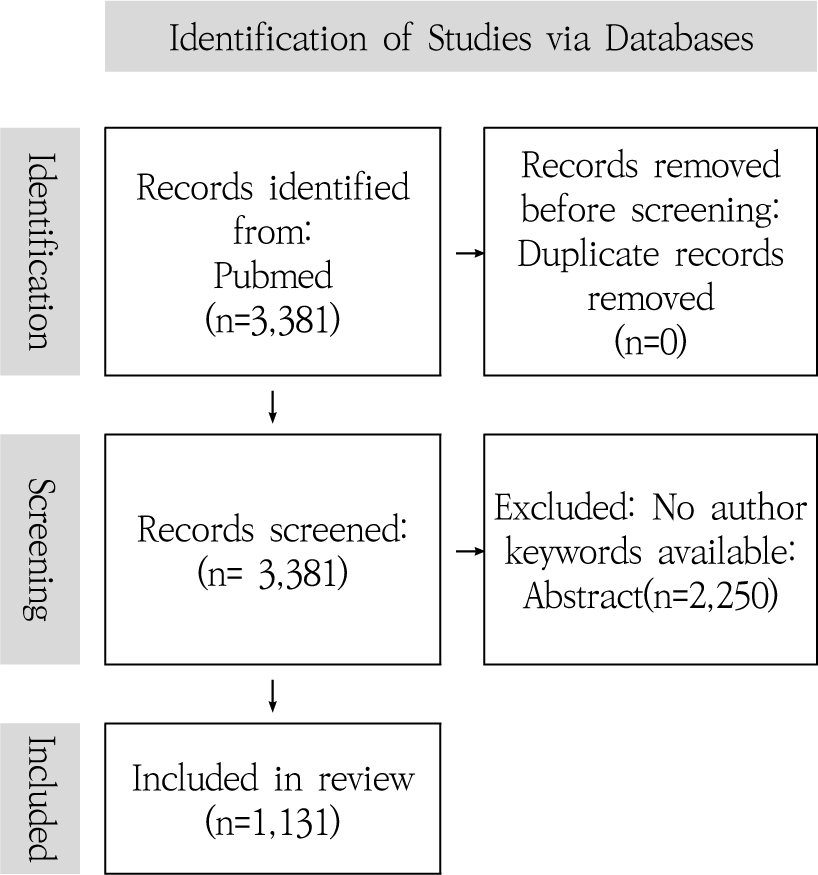
키워드 공출현 분석을 위하여 ‘저자 키워드’를 포함하는 문헌들을 확인하였고, 다음과 같이 총 1,131개의 문헌을 확보하였다.(Fig. 1)
jkmood-39-1-89-g1
Fig. 1. Literature Selection Flowchart
Download Original Figure

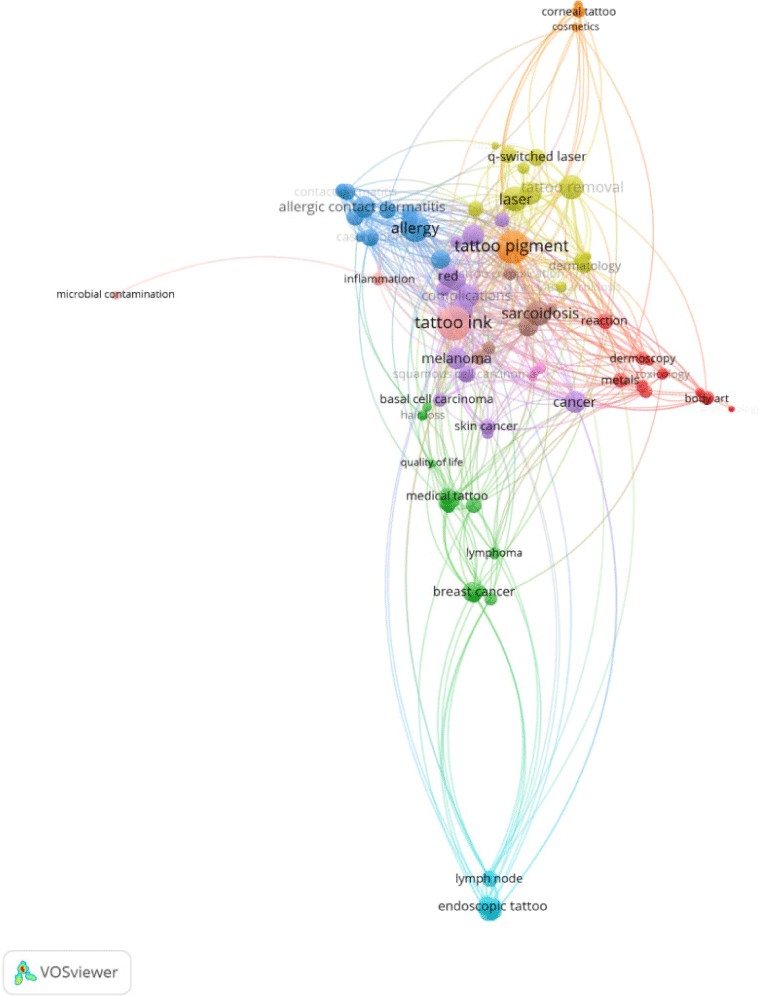
또한 해당 키워드들 중 tattoo, tattooing 등과 같이 ‘문신 그 자체’를 의미하는 키워드를 배제하고, tattoo ink-ink와 같은 동일 의미를 가진 단어들을 병합한 후 시각화 하였다(Fig. 2). 해당 키워드들을 수록하고 있는 학술지로는 『Contact Dermatitis』, 『J Cosmet Dermatol』등이 확인되었으며 구체적으로는 다음의 표와 같다(Table 2).
jkmood-39-1-89-g2
Fig. 2. Visualization of Keyword Co-occurrence Results
Download Original Figure
Table 2. Journals Appearing 10 or More Times
Journal Number of Articles
Contact Dermatitis 32
J Cosmet Dermatol 28
Dermatology 27
Cureus 27
Lasers Surg Med 25
JAAD Case Rep 23
J Am Acad Dermatol 20
Lasers Med Sci 17
Skin Res Technol 17
J Cosmet Laser Ther 16
Ann Dermatol Venereol 14
BMJ Case Rep 14
J Cutan Aesthet Surg 11
Surg Endosc 10
Download Excel Table
2. 총 연결강도 상위 키워드 분석 결과

분석 결과, ‘Tattoo Ink’, ‘Tattoo Pigment’는 특정 주제와 연관있기 보다는 ‘문신’ 전체와 관련한 주제로 확인되었다. 해당 두 키워드를 제외하고 상위 3개의 키워드는 Allergy, Sarcoidosis, Laser로 확인되었으며, 이를 포함하여 총 연결강도가 50 이상인 상위 키워드 14개가 도출되었다(Table 3).

Table 3. Summary of Analysis Results for Keywords with the Highest Total Link Strength
Keyword Total Link Strength Frequency Main Research Context
Tattoo Ink 193 85 Various topics related to tattoos
Tattoo Pigment 165 67 Various topics related to tattoos
Allergy 124 37 Allergic reactions to tattoo inks; patch testing; diagnostic algorithms
Sarcoidosis 98 43 Tattoo-induced systemic sarcoidosis; association with black tattoos; concomitant uveitis
Laser 89 40 Laser tattoo removal; comparison of wavelength-specific effects
Tattoo Removal 81 54 Efficacy of laser removal; number of treatment sessions; adverse effects
Infection 77 25 Bacterial contamination of inks; post-procedural infections; hepatitis C
Picosecond Laser 73 36 Comparison of picosecond versus nanosecond lasers; removal efficiency
Complications 71 25 Classification of tattoo-related complications; chronic and acute reactions
Melanoma 69 24 Melanoma arising in tattooed skin; response to BRAF inhibitors
Skin 61 27 Cutaneous reactions; 3D skin models; skin cancer
Allergic Contact Dermatitis 59 26 Diagnosis of contact dermatitis; patch testing; pigment-specific allergies
Cancer 59 15 Carcinogenicity assessment; skin cancer development; co-carcinogenic effects
Breast Cancer 53 34 Nipple-areola complex reconstruction tattoos after breast cancer surgery; radiotherapy alignment markers
Download Excel Table
1) Allergy (출현빈도 37, 연결강도 124)

‘Allergy’는 문신 시술 후 발생하는 과민반응 연구의 핵심 키워드이다. 문신 알레르기는 주로 적색 잉크에서 발생하며, 이는 전체의 약 50%를 차지한다. Silvestre와 González는 문신 잉크 알레르기 반응의 진단적 접근법을 제시하며, 첩포검사(patch test)의 한계와 잉크 성분의 복잡성으로 인한 진단의 어려움을 논의하였다13). De Cuyper는 문신 알레르기에서 원인 항원 규명의 어려움을 지적하며, 자외선 및 레이저 조사가 색소의 합텐화(haptenization)에 영향을 미칠 수 있음을 제시하였다14).

2) Sarcoidosis (출현빈도 43, 연결강도 98)

‘Sarcoidosis’는 문신, 특히 흑색 문신과 연관된 전신 육아종성 질환 연구에서 중요한 키워드이다. van der Bent 등은 308건의 문신 합병증을 분석하여 만성 염증성 흑색 문신 반응(chronic inflammatory black tattoo reaction, CIBTR)의 21.4%에서 피부 외 침범이 동반되며, 이 중 14.2%가 전신 사르코이드증, 7.1%가 포도막염임을 보고하였다15). Yamamoto 등은 문신 시술 10년 후 전신 림프절 비대를 동반한 사르코이드증 사례를 보고하며, 문신 성분이 대식세포의 전신 이물 반응을 유발할 수 있음을 제시하였다16).

3) Laser (출현빈도 40, 연결강도 89)

‘Laser’는 문신 제거술의 핵심 키워드로, 다양한 레이저 유형의 효능 비교 연구에서 사용된다. 주요 연구에서는 Q-switched 레이저, 피코초 레이저, CO₂ 분획 레이저 등의 제거 효율과 부작용을 비교한다. Jang 등은 이광자현미경(two-photon microscopy)을 이용하여 나노초 및 피코초 레이저의 색소 입자 파쇄 효과를 시각화하였다17). 레이저 파장에 따른 색상별 제거 효율 차이도 주요 연구 주제이다. Reiter 등의 체계적 문헌고찰에 따르면, 755, 758, 795, 1064, 1064/532㎚ 피코초 레이저가 주로 흑색 및 청색 잉크 문신 제거에 사용되었으며 대부분 수차례에 걸친 시술 후 70% 이상의 높은 제거율을 보였다18).

3. 클러스터 분석 결과

키워드 공출현 분석 결과, 크게 9개의 유의미한 클러스터가 확인되었다. 각 클러스터는 서로 다른 연구 주제와 임상적 관심 영역을 나타낸다.

1) 파란색 클러스터: 과민반응과 접촉성 피부염

파란색 클러스터(Blue Cluster)는 ‘allergy’, ‘allergic contact dermatitis’, ‘henna’, ‘patch test’, ‘hypersensitivity’, ‘nickel’, ‘p-phenylenediamine’ 등의 키워드로 구성되어 있으며, 문신 잉크 성분에 대한 알레르기 반응과 접촉성 피부염을 다루는 연구들이 집중되어 있다.

대표적으로 Liszewski 등은 미국 문신 잉크 중 25%(11종)가 접촉성 피부염을 유발한 것으로 의심된다고 보고하였고19), Silvestre와 González는 영구 문신에 대한 의심되는 알레르기 반응의 진단적 접근법을 제시하였으며13), El Habr 등은 블랙 헤나 문신 후 발생한 다모증 사례를 보고하였으며, 헤나 제품에 색을 진하게 하기 위해 첨가되는 물질들이 피부 반응을 유발할 수 있음을 경고하였다20). Laske 등은 적색 문신 염료에 대한 심각한 알레르기 반응의 수술적 치료 방법을 비교 분석하였으며, 염료를 완전히 제거하지 않는 표면 절제가 대부분의 경우 치유에 충분하다고 결론지었다21).

2) 보라색 클러스터: 감염 및 발암

보라색 클러스터(Purple Cluster)는 ‘tattoo ink’, ‘tattoo pigment’, ‘infection’, ‘complications’, ‘melanoma’, ‘squamous cell carcinoma’, ‘basal cell carcinoma’, ‘skin cancer’ 등의 키워드로 구성되어 있으며, 문신과 관련된 감염성 합병증 및 피부암과의 연관성을 다루는 연구들이 집중되어 있다.

대표적으로 Kluger는 영구 문신의 피부 합병증에 대한 종합 업데이트를 통해 감염 및 암 발생 위험을 포함한 다양한 합병증 유형을 정리하였고22), Leijs 등은 문신 부위에서 발생한 피부 악성종양 6건의 사례 연구를 통해 기저세포암, 흑색종, 편평세포암이 문신과 연관될 수 있음을 보고하였으며, 문헌 검토 결과 흑색 잉크 문신에서 36건, 적색 잉크에서 8건의 흑색종이 보고되었다고 정리하였다23).

3) 갈색 클러스터: 사르코이드증과 육아종

갈색 클러스터(Brown Cluster)는 ‘sarcoidosis’, ‘granuloma’, ‘granulomatous reaction’, ‘uveitis’, ‘tattoo complication’ 등의 키워드로 구성되어 있으며, 문신과 관련된 육아종성 반응 및 전신 사르코이드증을 다루는 연구들이 집중되어 있다.

대표적으로 Yamamoto 등은 전신 림프절 비대를 동반한 문신 관련 사르코이드증 사례를 보고하였으며, 스테로이드 치료가 효과가 없었으나 메토트렉세이트와 아달리무맙 병용 치료로 호전되었음을 기술하였다16). Giet 등은 BRAF(v-raf murine sarcoma viral oncogene homolog B) 억제제 치료 중 문신 부위에서 발생한 육아종성 반응을 보고하였으며24), Godinho 등은 적색 문신 색소에 대한 육아종 반응이 알로푸리놀 6개월 치료로 호전된 사례를 보고하였으나, 치료 중단 2개월 후 병변이 재발하였다25). 또한 Cussigh 등은 문신 후 발생한 육아종성 염증에 대해 병변 내 트리암시놀론 아세토나이드 주사로 성공적으로 치료한 사례를 보고하였다26).

4) 빨간색 클러스터: 독성 및 역학

빨간색 클러스터(Red Cluster)는 ‘toxicology’, ‘epidemiology’, ‘body art’, ‘prevalence’, ‘metals’, ‘polycyclic aromatic hydrocarbons’, ‘dermoscopy’ 등의 키워드로 구성되어 있으며, 문신 잉크의 독성학적 평가와 문신 인구의 역학적 특성을 다루는 연구들이 집중되어 있다.

대표적으로 Negi 등은 문신 잉크의 독성학적 위험에 대한 체계적 문헌고찰을 통해 다환방향족탄화수소(PAHs), 1차 방향족 아민, 중금속 등이 인체 건강에 미치는 영향과 규제 체계를 종합적으로 정리하였다27). Brady 등은 뉴욕 센트럴파크에서 문신 보유자를 대상으로 실시한 역학 조사를 통해 자가 보고된 문신 부작용의 실태를 분석하였다28). Friis 등은 덴마크에서 5,914명의 문신 보유자를 대상으로 인구 기반 역학 조사를 실시하여 문신 관련 피부 반응의 유병률과 특성을 분석하였다29). Wang 등은 73종의 문신 잉크를 분석하여 93%가 유럽연합 라벨링 규정을 위반하고 있으며, 중금속 등 유해물질이 광범위하게 포함되어 있음을 보고하였다30).

5) 분홍색 클러스터: 피부 질환의 치료 또는 악화

분홍색 클러스터(Pink Cluster)는 ‘koebner phenomenon’, ‘vitiligo’, ‘red pigment’, ‘granulomatous reaction’ 등의 키워드로 구성되어 있으며, 문신과 피부 질환 간의 다양한 상호작용을 다루는 연구들이 포함되어 있다. 이 클러스터에는 문신으로 인한 피부 질환 유발뿐만 아니라, 문신 기법을 활용한 피부 질환 치료 연구도 함께 포함되어 있다.

대표적으로 Macit 등은 백반증 환자에서 5-플루오로우라실 문신과 국소 룩소리티닙 병용 치료를 통해 성공적인 재색소화(repigmentation)를 달성한 사례를 보고하였다31). 반면, Rogowska 등은 문신에 따른 쾨브너 현상을 포함한 다양한 합병증 유형을 보고하였다32). Hong 등은 백반증 환자에서 문신 시술 후 쾨브너 현상으로 비대성 원판상 홍반성 루푸스가 유발된 사례를 보고하였다33).

6) 하늘색 클러스터: 소화기계 내시경 문신

하늘색 클러스터(Sky Blue Cluster)는 ‘endoscopic tattoo’, ‘colonoscopy’, ‘colorectal cancer’, ‘laparoscopy’, ‘localization’, ‘india ink’ 등의 키워드로 구성되어 있으며, 대장암 수술 전 병변 위치 표시를 위한 내시경적 문신 기법을 다루는 연구들이 집중되어 있다.

Milone 등은 무균 탄소 입자 현탁액(sterile carbon particle suspension, SCPS)이 인디아 잉크에 비해 시술 후 염증 반응과 수술 중 장 유착이 적어 더 나은 안전성 프로파일을 보인다고 결론지었다34). Nawras 등의 체계적 문헌고찰 및 메타분석에서는 수술 전 내시경 문신 시 직장암 환자에서는 문신군에서 유의하게 높은 림프절 수확량을 보였으나, 대장암 환자에서는 통계적으로 유의한 차이가 없었다35). Aawsaj 등(2017)은 내시경 문신 시술 후 발생한 간농양 사례를 보고하여, 이 시술의 잠재적 합병증에 대한 주의가 필요함을 제시하였다36).

7) 녹색 클러스터: 의료/유방 재건 문신

녹색 클러스터(Green Cluster)는 ‘medical tattoo’, ‘breast reconstruction’, ‘breast cancer’, ‘areola’, ‘nipple’, ‘mastectomy’, ‘quality of life’, ‘patient satisfaction’ 등의 키워드로 구성되어 있으며, 유방암 환자의 유방 재건 후 유두-유륜 복합체 재건을 위한 의료 문신을 다루는 연구들이 집중되어 있다.

대표적으로 Bennoun 등은 문신을 통해 유두-유륜 복합체의 시각적 외관을 정상에 가깝게 회복시킬 수 있다고 제시하였다37). Reid-de Jong 등은 유방절제술 문신이 자아 회복의 새로운 대안으로 부상하고 있음을 보고하였으며, 환자들의 심리적 회복에 기여하는 바를 분석하였다38).

8) 주황색 클러스터: 각막 문신

주황색 클러스터(Orange Cluster)는 ‘corneal tattoo’, ‘keratopigmentation’, ‘corneal opacity’, ‘cornea’, ‘cosmetics’ 등의 키워드로 구성되어 있으며, 각막 혼탁 환자의 미용적 개선을 위한 각막 문신(keratopigmentation) 기법을 다루는 연구들이 집중되어 있다.

대표적으로 Yilmaz 와 Oguz 는 문신 펜 기기를 사용한 각막 문신 시술에서 색상 퇴색 패턴을 분석하였으며, 밝은 색상이 더 빠르고 많이 퇴색되고 대부분의 퇴색이 첫 달에 발생함을 보고하였다39). Alio 등은 각막색소침착술의 합병증을 분석하였으며, 전체 환자의 12.82%에서 합병증이 발생하였고, 광과민성(49%), 색상 변화 및 퇴색(19%), 신생혈관(7%) 순으로 나타났다고 보고하였다. 특히 피부과용 색소는 합병증을 유발하므로 사용하지 말아야 하며, 안과용으로 독성 및 기형유발성이 검증된 색소만 사용해야 한다고 권고하였다40). Yilmaz 등은 각막 백반 환자에서 각막 문신 후 우울, 불안, 사회적 외모 불안 점수가 유의하게 감소하였음을 보고하였다41).

9) 노란색 클러스터: 레이저 문신 제거

노란색 클러스터는 ‘picosecond laser’, ‘q-switched laser’, ‘nd:yag laser’, ‘tattoo removal’, ‘laser treatment’, ‘scar’ 등의 키워드로 구성되어 있으며, 레이저를 활용한 문신 제거 기술과 관련된 연구들이 집중되어 있다.

대표적으로 Reiter 등은 피코초 레이저의 문신 제거 효과에 대한 체계적 문헌고찰을 수행하였으며, 피코초 레이저가 나노초 레이저보다 더 효과적일 수 있으며, 다만 근거가 아직 충분하지는 않다고 결론지었다18). Kato 등은 피코초(750㎰)가 나노초(2㎱)보다 잉크 입자 분산에 더 효과적이라는 전자현미경 결과 를 제시하며, 나노초(2㎱)와 피코초(750㎰) 펄스 폭을 조합한 이중 파장 엔디야그 레이저 치료가 기존 Q-switched 레이저보다 더 효과적이며 안전하다고 보고하였다42).

4. 상위 키워드 및 클러스터 분석을 통한 주요 주제 도출 결과

총 연결강도 상위 키워드 14개와 9개 클러스터의 분석 결과를 매핑하여, 문신과 관련 문헌들의 주요 주제를 도출하였다.(Table 4) 클러스터와 상위 키워드의 연결 관계를 검토한 결과, 문신 관련 연구는 ‘부작용 및 독성’, ‘의료용 문신’, ‘레이저 문신제거’ 등 크게 3개의 대주제로 범주화 할 수 있었다. 상위 키워드들 중 ‘Tattoo Ink’, ‘Tattoo Pigment’는 연구결과 특정 클러스터나 특정 군집에 해당하지 않고 관련 문헌 전반에 사용되는 보편적 키워드로 확인되어 배제하였다.

Table 4. Extracting Key Topics Through Cluster-to-high-level Keyword Mapping
Main Theme Cluster Cluster Theme Related Top Keywords (Total Link Strength)
Adverse Effects and Toxicity Blue Hypersensitivity and Contact Dermatitis Allergy (124); Allergic Contact Dermatitis (59);
Purple Infection and Carcinogenesis Infection (77); Complications (71); Melanoma (69); Skin (61); Cancer (59)
Brown Sarcoidosis and Granulomatous Reactions Sarcoidosis (98)
Red Toxicity and Epidemiology -
Pink Exacerbation of Skin Diseases -
Medical Tattooing Sky Blue Gastrointestinal Endoscopic Tattooing -
Green Medical and Breast Reconstruction Tattooing Breast Cancer (53)
Orange Corneal Tattooing -
Pink Vitiligo Treatment -
Laser Tattoo Removal Yellow Laser Tattoo Removal Laser (89); Tattoo Removal (81); Picosecond Laser (73)
Download Excel Table

‘부작용 및 독성’ 대주제는 파란색, 보라색, 갈색, 빨간색, 분홍색(일부) 등 5개 클러스터와 8개 상위 키워드를 포함하여 가장 큰 비중을 차지하였다. 이는 문신의 의학적 연구가 주로 합병증과 안전성 이슈에 집중되어 있음을 나타낸다.

‘의료용 문신’ 대주제는 하늘색, 녹색, 주황색, 분홍색(일부) 등 4개 클러스터를 포함하나, 상위 키워드 중에서는 ‘breast cancer’(53)만이 해당되었다. 이는 의료용 문신이 다양한 임상 영역(내시경, 유방 재건, 각막)에서 활용되고 있으나, 아직 ‘문신 부작용’에 비해서는 의료 현장에서의 부각은 부족하다는 점을 의미한다.

‘레이저 문신 제거’ 대주제는 노란색 단일 클러스터를 포함하나 다수의 상위 키워드를 포함하여 연구 집중도가 높았다. 특히 ‘picosecond laser’의 부각은, 문신 제거 레이저와 관련하여 파장도 주요 관심사이긴 하지만 그 이상으로 펄스지속시간에 대한 관심이 집중됨을 나타낸다.

Ⅳ. 고 찰

이상으로 도출된 세 분류의 대주제를 바탕으로 다섯 가지 논의점으로 나누어 고찰하고자 한다.

첫째, 문신 염료의 품질관리 필요성이다. 다수의 문신 잉크가 라벨링 규정을 위반하고 있으며, 알레르기 유발 물질 및 중금속 등의 유해 화학물질 포함 가능성이 보고되었다. 이는 문신 염료에 대한 법적 품질관리 기준 마련이 시급함을 시사한다.

둘째, 의사 및 한의사의 관리·감독 체계 구축의 필요성이다. 문신은 알레르기, 감염, 육아종뿐 아니라 사르코이드증, 포도막염 등 전신 질환과도 연관될 수 있으며, 기존 피부질환을 악화시킬 가능성도 있다. 따라서 시술 전 건강 평가와 시술 후 합병증 대응을 위해 의료인의 감독 하에 문신 시술이 이루어질 수 있는 제도적 장치가 요구된다.

셋째, 문신사의 시술 범위 명확화이다. 고위험 또는 특수 부위 문신과 암 환자나 약물치료 환자 등 특수 대상에 대한 시술은 의료인의 판단과 의료기관 내 시행이 필요하며, 문신사의 시술 가능 범위에 대한 세부적 논의가 필요하다.

넷째, 부작용에 대한 충분한 사전 고지의 중요성이다. 문신 알레르기와 합병증은 사전 검사로 예측이 어렵고, 수년 후 발생할 수도 있다. 또한 감염 및 약물 치료와 연관된 지연성 부작용 가능성도 존재하므로, 시술 전 합병증 종류, 위험 요인, 증상 발생 시 대처 방법 등에 대한 충분한 설명이 필수적이다.

다섯째, 문신 제거율에 대한 정확한 정보 제공이다. 색상이나 염료에 따라 제거율 차이가 크고, 레이저 치료의 효과 역시 완전하지 않다. 따라서 시술 전 염료별 제거 가능성에 대한 정보 제공이 필요하며, 이와 관련하여 염료별 제거율에 대한 체계적 연구와 정보 공시 제도가 마련되어야 한다.

다만 본 연구는 몇 가지 한계를 지닌다. 첫째, PubMed에 검색되지 않는 해외 문헌이나 국내 문헌은 포함되지 않았다. 둘째, 저자 키워드가 있는 문헌만을 대상으로 하였다. 셋째, 본 연구는 문헌의 연구 주제를 탐색적으로 파악하는 데 초점을 두었으므로, 개별 합병증의 발생률이나 위험 요인에 대한 정량적 분석은 수행하지 않았다. 넷째, 본 연구는 문헌을 대상으로 한 분석으로 실제 임상 현장이나 정책 시행 결과를 직접적으로 검증하지는 못하였다. 향후 연구에서는 다양한 데이터베이스를 포함하고, 체계적 문헌고찰 방법론을 적용하여 보다 포괄적인 분석을 수행할 필요가 있다.

Ⅴ. 결 론

본 연구는 PubMed에서 검색된 문신 관련 의학 문헌 1,131건을 대상으로 키워드 공출현 분석을 통한 합산적 내용분석을 수행하여 주요 연구 주제를 탐색하였다. 분석 결과, 문신 관련 의학 연구는 ‘부작용 및 독성’, ‘의료용 문신’, ‘레이저 문신 제거’의 세 가지 대주제로 범주화 되었으며, 이 중 부작용 및 독성 관련 연구가 가장 큰 비중을 차지하였다.

이러한 분석 결과는 2025년 문신사법 시행에 앞서 다음과 같은 제도적 보완이 필요함을 나타낸다. 첫째, 문신 염료의 품질관리 필요성이다. 둘째, 의사 및 한의사의 관리·감독 체계 구축의 필요성이다. 셋째, 문신사의 시술 범위 명확화이다. 넷째, 부작용에 대한 충분한 사전 고지의 중요성이다. 다섯째, 문신 제거율에 대한 정확한 정보 제공이다.

저자 기여도

모든 저자는 본 연구에 참여하였으며, 곽도원, 권지수, 이재현은 논문 작성에 동등하게 기여하였음.

References

1.

Dodig S, Čepelak-Dodig D, Gretić D, Čepelak I. Tattooing: immediate and long-term adverse reactions and complications. Arhiv za higijenu rada i toksikologiju 2024. doi: .

2.

Islam PS, Chang C, Selmi C, Generali E, Huntley A, Teuber SS, et al. Medical Complications of Tattoos: A Comprehensive Review. Clinical Reviews in Allergy & Immunology 2016. doi: .

3.

Schreiver I, Hutzler C, Andree S, Laux P, Luch A. Identification and hazard prediction of tattoo pigments by means of pyrolysis-gas chromatography/mass spectrometry. Archives of Toxicology 2016. doi: .

4.

Proctor M, Cassisi JE, Dvorak RD, Decker V. Medical tattooing as a complementary cosmetic intervention to reduce body-image distress and mental health symptoms in U.S. breast cancer survivors. Supportive Care in Cancer 2024. doi: .

5.

Zhang M, Huang Y, Lin T, Wu Q. Comparison of treatment with an Alexandrite picosecond laser and Nd:YAG nanosecond laser for removing blue-black Chinese eyeliner tattoos. Journal of Cosmetic and Laser Therapy 2018. doi: .

6.

Supreme Court of Korea. Decision 91Do3219. 1992.

7.

Ministry of Health and Welfare. Tattoo, safely! Proudly! 2025 Sept 25. Available from: URL:https://www.mohw.go.kr/board.es?mid=a10503010100&bid=0027&act=view&list_no=1487514&tag=&nPage=1

8.

Hsieh HF, Shannon SE. Three approaches to qualitative content analysis. Qualitative Health Research. 2005;15(9):1277-88. .

9.

Donthu N, Kumar S, Mukherjee D, Pandey N, Lim WM. How to conduct a bibliometric analysis: An overview and guidelines. Journal of Business Research. 2021;133:285-96. .

10.

van Eck NJ, Waltman L. Software survey: VOSviewer, a computer program for bibliometric mapping. Scientometrics. 2010;84(2):523-39. .

11.

Holmberg C. Swedish nursing research: A bibliometric and content analysis revealing author and institute collaborations, impact, and topics. Nordic Journal of Nursing Research. 2024;44:20571585241227583. .

12.

Ramos-Medina SE. Bibliometric analysis through the use of keywords and abstract: Research in law during the pandemic. In: Mansour N, Bujosa Vadell LM, eds. Finance, Law, and the Crisis of COVID-19. Springer. 2022:193-207. .

13.

Silvestre JF, González Villanueva I. Diagnostic Approach for Suspected Allergic Cutaneous Reaction to a Permanent Tattoo. Journal of Investigational Allergology and Clinical Immunology 2019. doi: .

14.

De Cuyper C. How to advise a patient who wants a tattoo? La Presse Médicale 2020. doi: .

15.

van der Bent SAS, Rauwerdink D, Oyen EMM, Maijer KI, Rustemeyer T, Wolkerstorfer A. Complications of tattoos and permanent makeup: overview and analysis of 308 cases. Journal of Cosmetic Dermatology 2021. doi: .

16.

Yamamoto U, Ikuma D, Oba Y, Mizuno H, Sekine A, Yamanouchi M, et al. A case of tattoo-related sarcoidosis with generalised lymph node enlargement. Modern Rheumatology Case Reports 2025. .

17.

Jang WH, Yoon Y, Kim W, Kwon S, Lee S, Song D, et al. Visualization of laser tattoo removal treatment effects in a mouse model by two-photon microscopy. Biomedical Optics Express 2017. doi: .

18.

Reiter O, Atzmony L, Akerman L, Levi A, Kershenovich R, Lapidoth M, et al. Picosecond lasers for tattoo removal: a systematic review. Lasers in Medical Science 2016. doi: .

19.

Liszewski W, Warshaw EM. Pigments in American tattoo inks and their propensity to elicit allergic contact dermatitis. Journal of the American Academy of Dermatology 2019. .

20.

El Habr C, Mégarbané H. Temporary henna tattoos and hypertrichosis: a case report and review of the literature. Journal of Dermatological Case Reports 2015. .

21.

Laske J, Maschke J, Bauer A, Beissert S, Aschoff R. Operative Treatment of Severe Allergic Reactions to Red Tattoo Dye: Presentation and Comparison of Possible Surgical Procedures in Seven Patients. Journal of Cutaneous and Aesthetic Surgery 2022. .

22.

Kluger N. An update on cutaneous complications of permanent tattooing. Expert Review of Clinical Immunology. 2019. doi: .

23.

Leijs M, Schaefer H, Rübben A, Cacchi C, Rustemeyer T, van der Bent S. Cutaneous Malignancies in Tattoos, a Case Series of Six Patients. Current Oncology. 2021. doi: .

24.

Giet G, Lebas E, Rorive A, Arrese JE, Nikkels AF. Granulomatous Reactions from Tattoos Following BRAF Inhibitor Therapy. Case Reports in Dermatology 2019. .

25.

Godinho MM, Aguinaga F, Grynszpan R, Lima VM, Azulay DR, Cuzzi T, et al. Granulomatous reaction to red tattoo pigment treated with allopurinol. Journal of Cosmetic Dermatology 2015. .

26.

Cussigh CS, Toberer F, Enk A, Haenssle HA, Fink C. Effectiveness of intralesional steroid injections in granulomatous inflammation after tattooing. Der Hautarzt 2020.

27.

Negi S, Bala L, Shukla S, Chopra D. Tattoo inks are toxicological risks to human health: A systematic review of their ingredients, fate inside skin, toxicity due to polycyclic aromatic hydrocarbons, primary aromatic amines, metals, and overview of regulatory frameworks. Toxicology and Industrial Health. 2022. .

28.

Brady BG, Gold H, Leger EA, Leger MC. Self-reported adverse tattoo reactions: a New York City Central Park study. Contact Dermatitis. 2015.

29.

Friis K, Ladehoff Thomsen AM, Olsen J, Rahbek Rørth M, Serup J. Tattoo-Associated Skin Reactions: A Danish Population-Based Survey in 5,914 Tattooed Individuals. Dermatology. 2024. .

30.

Wang X, Josefsson L, Meschnark S, Lind ML, Emmer Å, Goessler W, et al. Analytical survey of tattoo inks-A chemical and legal perspective with focus on sensitizing substances. Contact Dermatitis. 2021. .

31.

Macit B, Burns L, Wambier CG. Repigmentation of vitiligo with 5-fluorouracil tattooing in combination with topical ruxolitinib: A case report. JAAD Case Reports 2025. .

32.

Rogowska P, Sobjanek M, Sławińska M, Nowicki RJ, Szczerkowska-Dobosz A. Tattoos Dermatological Complications: Analysis of 53 Cases from Northern Poland. Dermatology 2022. doi: .

33.

Hong YY, Hsieh IJ, Cai SQ. Tattoo-induced hypertrophic discoid lupus erythematosus in a patient with vitiligo. Journal der Deutschen Dermatologischen Gesellschaft. 2025. .

34.

Milone M, Vignali A, Manigrasso M, Velotti N, Sarnelli G, Aprea G, et al. Sterile carbon particle suspension vs India ink for endoscopic tattooing of colonic lesions: a randomized controlled trial. Techniques in Coloproctology 2019. .

35.

Nawras M, Chawla K, DeRiso A, Dubchuk C, Beran A, Aziz M, et al. The effect of preoperative endoscopic tattooing on lymph node retrieval in colorectal cancer: a systematic review and meta-analysis. International Journal of Colorectal Disease 2023. .

36.

Aawsaj YM, Kelly S, Slater B. Liver abscess secondary to an endoscopic tattoo in the colon. Annals of The Royal College of Surgeons of England 2017. .

37.

Bennoun I. Areola and Nipple Reconstruction in Breast Cancer and Other Conditions. Current Problems in Dermatology 2022. .

38.

Reid-de Jong V, Bruce A. Mastectomy tattoos: An emerging alternative for reclaiming self. Nursing Forum 2020. .

39.

Yilmaz OF, Oguz H. Aesthetic corneal tattooing/keratopigmentation using tattoo pen machine: choosing suitable method and color. Graefe's Archive for Clinical and Experimental Ophthalmology 2023. .

40.

Alio JL, Al-Shymali O, Amesty MA, Rodriguez AE. Keratopigmentation with micronised mineral pigments: complications and outcomes in a series of 234 eyes. British Journal of Ophthalmology 2018. .

41.

Yilmaz OF, Durmus E, Esen F, Bikmazer A, Kisakurek AB, Ersoy EE, et al. Does Corneal Tattooing Improve Psychosocial Functioning in Patients With Corneal Leukoma? A Pilot Study. Eye & Contact Lens 2025. .

42.

Kato H, Doi K, Kanayama K, Araki J, Nakatsukasa S, Chi D, et al. Combination of Dual Wavelength Picosecond and Nanosecond Pulse Width Neodymium-Doped Yttrium-Aluminum-Garnet Lasers for Tattoo Removal. Lasers in Surgery and Medicine 2020. .

Appendices

부 록
1. 키워드 공출현 분석 배제 키워드
Excluded Keywords
tatouage
tattoo
tattooed
tattooing
tattoos
tatuage
Download Excel Table
2. 키워드 공출현 분석 유의어 사전
Label Replace by
allergic reaction allergy
complication complications
corneal tattooing corneal tattoo
endoscopic tattooing endoscopic tattoo
hypersensitivity reaction hypersensitivity
infections infection
lymph nodes lymph node
medical tattooing medical tattoo
nd:yag nd:yag laser
patch testing patch test
permanent make-up permanent makeup
picosecond picosecond laser
q-switched q-switched laser
ink tattoo ink
tattoo inks tattoo ink
pigment tattoo pigment
pigmentation tattoo pigment
tattoo reaction reaction
tattoo allergy allergy
Download Excel Table