Original Article / 원저

네트워크 약리학을 통한 山楂의 심상성 건선 치료 기전 탐색 : 증식 신호와 지질 대사–산화 스트레스 축을 중심으로

박수진1,4https://orcid.org/0000-0002-2585-9837, 이희재1,4https://orcid.org/0009-0008-0810-4767, 양지예1,4https://orcid.org/0009-0002-4899-246X, 김규석2https://orcid.org/0000-0002-3802-8717, 김민희3https://orcid.org/0000-0002-6593-2410, 남혜정2https://orcid.org/0000-0002-9974-0863, 김윤범2,*https://orcid.org/0000-0002-1254-7797
Soojin Park1,4https://orcid.org/0000-0002-2585-9837, Heejae Lee1,4https://orcid.org/0009-0008-0810-4767, Jiye Yang1,4https://orcid.org/0009-0002-4899-246X, Kyuseok Kim2https://orcid.org/0000-0002-3802-8717, Min Hee Kim3https://orcid.org/0000-0002-6593-2410, Haejeong Nam2https://orcid.org/0000-0002-9974-0863, YoonBum Kim2,*https://orcid.org/0000-0002-1254-7797
Author Information & Copyright
1경희대학교 한방병원 한방안이비인후피부과 (수련의)
2경희대학교 한방병원 한방안이비인후피부과 (교수)
3강동경희대학교 한방병원 한방안이비인후피부과 (교수)
4경희대학교 일반대학원 임상한의학과 (대학원생)
1Department of Ophthalmology, Otolaryngology and Dermatology of Korean Medicine, Kyung Hee University
2Department of Ophthalmology, Otolaryngology and Dermatology of Korean Medicine, Kyung Hee University
3Department of Ophthalmology, Otolaryngology and Dermatology of Korean Medicine, Kyung Hee University Hospital at Gangdong
4Department of Clinical Korean Medicine, Graduate school, Kyung Hee University
*Corresponding author : YoonBum, Kim, Department of Ophthalmology, Otorhinolaryngology and Dermatology of Korean Medicine, Kyung Hee University, 23, Kyungheedae-ro, Dongdaemun-gu, Seoul, 02447, Korea. (Tel : 02-958-9181, E-mail : kyb0517@khu.ac.kr)

© 2026 the Society of Korean Medicine Ophthalmology & Otolaryngology & Dermatology. This is an Open-Access article distributed under the terms of the Creative Commons Attribution NonCommercial-ShareAlike License (http://creativecommons.org/licenses/by-nc-sa/3.0/) which permits unrestricted non-commercial use, distribution, and reproduction in any medium, provided the original work is properly cited.

Received: Apr 14, 2026 ; Revised: Apr 29, 2026 ; Accepted: May 06, 2026

Published Online: May 25, 2026

Abstract

Objective : The goal of this research was to elucidate the pharmacological pathways through which Crataegi Fructus mitigates psoriasis vulgaris, utilizing an integrated network pharmacology framework.

Methods : Bioactive constituents of Crataegi Fructus were retrieved from the OASIS database and filtered by Lipinski's rule, bioavailability score, and TPSA thresholds via SwissADME. Target proteins for each constituent were subsequently inferred through SwissTargetPrediction. Psoriasis-associated genes were sourced from GeneCards, and shared targets were determined using Venny. A network of protein–protein interactions was modeled through STRING and visualized in Cytoscape, followed by the selection of key hub nodes via centrality-centered topological filtering. Functional enrichment via ClueGO and Enrichr identified key GO terms and KEGG pathways.

Results : Thirteen active compounds of Crataegi Fructus were identified, yielding 317 predicted target proteins. Among these, 180 genes overlapped with psoriasis-related targets. PPI network analysis identified 28 core genes, including STAT3, EGFR, AKT1, SRC, HIF1A, MAPK1, MAPK14, and PPARG. Enrichment analyses revealed significant involvement of EGFR/ERBB signaling pathways associated with keratinocyte proliferation, as well as HIF-1, AGE–RAGE, and lipid metabolism-related pathways. These findings suggest that Crataegi Fructus may modulate both proliferative and metabolic signaling axes implicated in psoriasis pathogenesis.

Conclusion : Crataegi Fructus potentially exerts multi-component, multi-target effects in psoriasis vulgaris by regulating keratinocyte proliferation and metabolic signaling pathways. These results provide a systems-level perspective on its therapeutic mechanisms; however, further experimental validation is required.

Keywords: Crataegi Fructus; Psoriasis vulgaris; Network pharmacology; Keratinocyte proliferation; Metabolic signaling

Ⅰ. 서론 (Introduction)

건선은 표피의 과증식과 만성 염증을 특징으로 하는 면역 매개 피부 질환1)으로, 최근에는 피부에 국한된 것이 아닌 전신 염증 반응과 밀접한 관련이 있는 질환으로 인식되고 있다2). 대규모 메타분석에 따르면 건선은 당뇨병, 고혈압, 고지혈증, 비만과 유의한 관련성을 보이며3) , 건선 환자에서 동반되는 대사증후군은 심혈관 질환 및 조기 사망 위험을 높이는 주요 인자로 제시된다4). 이는 건선이 면역 반응과 대사 이상이 상호작용하는 복합적인 전신 염증 상태와 관련됨을 시사한다.

건선의 병태생리는 각질형성세포와 T helper 세포 간의 상호작용을 중심으로 하며, 특히 IL-23–Th17–keratinocyte 축에 의한 염증 증폭 기전이 질환의 만성화를 유도한다1). 최근 면역 신호와 대사 경로의 교차를 설명하는 면역대사(immunometabolism) 개념이 대두되며, 건선은 면역 체계와 지질 및 당 대사가 복합적으로 얽힌 네트워크 질환으로 이해된다2). 현재의 건선 치료에는 TNF-α, IL-17 등을 표적으로 하는 생물학적 제제가 사용되나, 단일 경로만을 표적으로 하는 치료 전략은 건선에서의 전반적인 면역-대사 상호 작용을 조절하는 데 한계가 있다1,5).

건선의 주요 변증 유형으로 血熱, 血瘀, 血燥, 濕熱 등이 제시되며, 대사적 불균형 및 기혈 순환의 정체가 건선의 주요 병태로 이해된다6,7). 이는 현대적 연구에서 제시하는 전신 염증 및 대사 이상 개념과 상응하는 측면이 있다. 건선이 다양한 대사 질환과 연관되는 점을 고려할 때, 건선 치료에서도 전신 염증 환경을 통합적으로 조절하는 전략이 필요하다8).

山楂(Crataegi Fructus)는 전통적으로 消食健胃 및 行氣散瘀의 효능을 통해 식적과 어혈을 개선하는 데 활용되었다9). 현대 약리학 연구에 따르면 山楂의 주요 성분인 rutin은 건선 각질형성세포에서 JAK2/STAT3 신호 전달을 억제함으로써 염증 반응을 완화하는 것으로 보고되며10), quercetin 및 epicatechin 등은 항산화 활성, 지질 대사 조절, AGEs 형성 억제를 통해 건선의 대사적 병인을 제어하는 것으로 확인된다11,12). 이러한 山楂의 항염증 및 지질 조절 특성은 면역-대사 불균형이라는 건선의 핵심 병태를 통합적으로 조절할 수 있는 기전적 근거를 제시한다. 기존 山楂 연구가 주로 심혈관계 및 소화기계 적응증에 집중되어 온 것과 달리13), 본 연구는 山楂의 다성분-다표적 특성이 건선의 복합적인 면역-대사 네트워크에 미치는 영향을 규명하고자 한다.

본 연구에서는 네트워크 약리학적 접근을 활용하여 山楂의 활성 성분과 심상성 건선 관련 표적 간의 상호작용을 분석하고, 핵심 표적 유전자 및 주요 신호 전달 경로를 규명함으로써 山楂의 잠재적인 건선 치료 기전을 탐색하고자 하였다.

Ⅱ. 방법 (Materials and Methods)

1. 山楂의 활성 성분 수집 및 선별

본 연구에서는 山楂에 포함된 화학 성분을 수집하기 위하여 OASIS 전통의학정보포털(https://oasis.kiom.re.kr)을 활용하였다. 해당 데이터베이스에서 '山楂' 를 검색하여 확인된 주요 성분을 1차적으로 수집하였으며, 이 중 PubChem ID가 확인되지 않는 화합물은 분석 대상에서 제외하였다. 이후 PubChem database(https://pubchem.ncbi.nlm.nih.gov/>)를 이용하여 각 성분의 분자 구조 및 SMILES(Simplified Molecular Input Line Entry System) 정보를 확인하였다. 그 다음 SwissADME(https://www.swissadme.ch/)를 활용하여 각 성분의 경구 생체이용 가능성을 평가하였다. 본 연구에서는 Lipinski's Rule의 4가지 항목(분자량 500 이하, MlogP 4.15 이하, 수소 결합 공여자(Hydrogen Bond Donor) 5개 이하, 수소 결합 수용체(Hydrogen Bond Acceptor) 10개 이하) 중 2개 미만의 항목을 위반한 화합물만을 1차 선별하였다14). 여기에 Bioavailability score 0.1 초과 및 TPSA(Topological Polar Surface Area) 140 Ų 미만이라는 조건을 추가 적용하여 최종 유효 성분을 확정하였다15).

2. 山楂의 활성 성분의 잠재적 표적 단백질 식별

山楂의 활성 성분의 표적 단백질을 예측하기 위해 SwissTargetPrediction(http://www.swisstargetprediction.ch/)을 활용하였다. 각 활성 성분의 SMILES 정보를 입력하여 표적 단백질을 예측하였으며, 분석 시 대상 종(Species)은 Homo sapiens로 설정하였다. 이 과정에서 생체 활성 확률(Probability)이 0인 항목은 분석에서 배제하였다.

3. 건선 연관 표적 단백질 확인 및 공통 표적 시각화

건선 연관 표적 단백질을 수집하기 위해 GeneCards(https://www.genecards.org/)에서 ‘psoriasis vulgaris’ OR ‘plaque psoriasis’를 검색하였다. 이후 山楂의 활성 성분으로부터 예측된 표적 단백질과 건선 관련 표적 단백질 간의 공통 유전자를 도출하기 위하여 Venny 2.1.0(https://bioinfogp.cnb.csic.es/tools/venny/)을 활용하였다.

4. PPI 네트워크 구성 및 핵심 유전자(Core gene) 선별

도출된 공통적인 표적 단백질을 대상으로 단백질–단백질 상호작용 네트워크를 구축하기 위해 STRING database(version 12.0, https://string-db.org/)를 이용하였다. 분석 과정에서 Organism은 Homo sapiens로 한정하였으며, 0.7 초과의 높은 신뢰도 지수(Highest confidence)를 Interaction score의 필터링 기준으로 적용하여 단백질 간의 유의미한 결합만을 선별하였다. 해당 조건에 따라 생성된 PPI 네트워크는 Cytoscape(version 3.10.4)를 사용하여 시각화하였다. 네트워크의 위상학적 특징을 분석하기 위해 CytoNCA(version 2.1.6)를 이용하였으며, 연결 중심도(Degree), 매개 중심도(Betweenness), 근접 중심도(Closeness), 고유벡터 중심도(Eigenvector)를 각각 산출하였다. 위 4가지 지표에서 모두 평균값 이상인 유전자를 최종 핵심 유전자로 선정하였다.

5. 생물학적 기능 및 경로 분석 (GO 및 KEGG Pathway)

공통 표적 단백질의 경로 분석에는 Cytoscape의 ClueGO(version 2.5.10)과 Enrichr(https://maayanlab.cloud/Enrichr/)가 사용되었다. 이를 통해 Gene Ontology(GO) 분석과 Kyoto Encyclopedia of Genes and Genomes(KEGG) pathway 분석을 수행하였다. ClueGO 분석에서는 P-value ≤ 0.05과 kappa score ≥ 0.7을 기준으로 설정하였다.

Ⅲ. 결과 (Results)

1. 山楂의 활성 성분 수집 및 선별

OASIS 전통의학정보포털을 통해 山楂의 주요 성분을 검색한 결과 총 64개의 화합물이 확인되었다. 이 중 중복 성분을 제거하고 PubChem ID가 확인되지 않는 화합물을 제외한 후, 총 29개의 성분이 분석 대상으로 선정되었다. SwissADME를 이용하여 Lipinski's rule, Bioavailability Score, TPSA 기준을 적용한 결과, 모든 조건을 충족하여 최종적으로 활성 성분으로 선별된 화합물은 13개였다: 4-aminobenzoic acid, Byzantionoside B, catechin, catechin benzylthioether, epicatechin, epicatechin benzylthioether, eucomic acid, quercetin, ursolic acid, benzyl mercaptan, caffeic acid, eriodectyol, gallic acid (Table 1).

Table 1. Active Compounds of Crataegi Fructus Identified Through ADME-Based Screening
Active Compound Pubchem ID SMILES
1 4-aminobenzoic acid 978 C1=CC(=CC=C1C(=O)O)N
2 Byzantionoside B 14135395 CC1=CC(=O)CC([C@H]1CC[C@@H](C)O[C@H]2[C@@H]([C@H]([C@@H]([C@H](O2)CO)O)O)O)(C)C
3 catechin 9064 C1[C@@H]([C@H](OC2=CC(=CC(=C21)O)O)C3=CC(=C(C=C3)O)O)O
4 catechin benzylthioether 101607233 C1=CC=C(C=C1)CC2[C@@H]([C@H](SC3=CC(=CC(=C23)O)O)C4=CC(=C(C=C4)O)O)O
5 epicatechin 72276 C1[C@H]([C@H](OC2=CC(=CC(=C21)O)O)C3=CC(=C(C=C3)O)O)O
6 epicatechin benzylthioether 101607232 C1=CC=C(C=C1)CC2[C@H]([C@H](SC3=CC(=CC(=C23)O)O)C4=CC(=C(C=C4)O)O)O
7 eucomic acid 23757219 C1=CC(=CC=C1C[C@@](CC(=O)O)(C(=O)O)O)O
8 quercetin 5280343 C1=CC(=C(C=C1C2=C(C(=O)C3=C(C=C(C=C3O2)O)O)O)O)O
9 ursolic acid 64945 C[C@@H]1CC[C@@]2(CC[C@@]3(C(=CC[C@H]4[C@]3(CC[C@@H]5[C@@]4(CC[C@@H](C5(C)C)O)C)C)[C@@H]2[C@H]1C)C)C(=O)O
10 benzyl mercaptan 7509 C1=CC=C(C=C1)CS
11 caffeic acid 689043 C1=CC(=C(C=C1/C=C/C(=O)O)O)O
12 eriodectyol 440735 C1[C@H](OC2=CC(=CC(=C2C1=O)O)O)C3=CC(=C(C=C3)O)O
13 gallic acid 370 C1=C(C=C(C(=C1O)O)O)C(=O)O
Download Excel Table
2. 山楂의 활성 성분의 잠재적 표적 단백질 식별

각 활성 성분의 화학적 구조(SMILES)를 바탕으로 SwissTargetPrediction 분석을 실시하였으며, 이를 통해 성분들이 결합할 수 있는 생체 내 표적 단백질들을 예측하고 선정하였다. 중복된 표적과 Probability = 0인 항목을 제외한 결과, 총 317개의 표적 단백질이 도출되었다.

3. 건선 연관 표적 단백질 확인 및 공통 표적 시각화

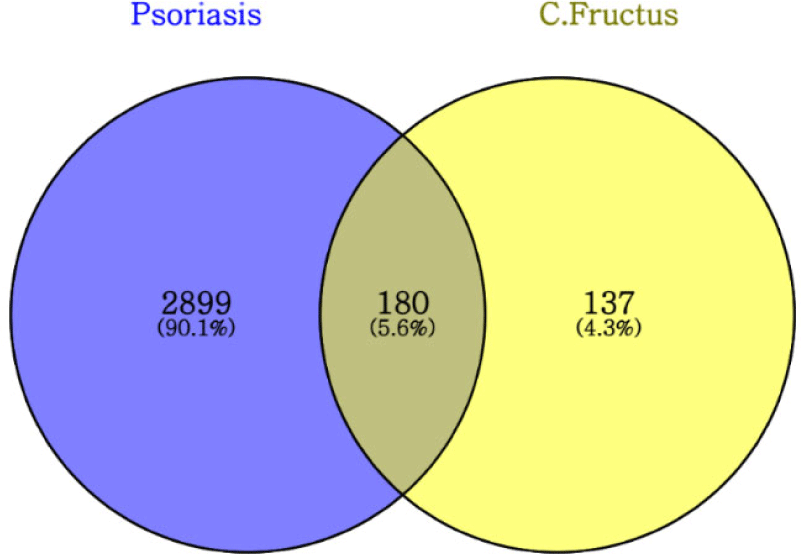
GeneCards에서 ‘psoriasis vulgaris’ 및 ‘plaque psoriasis’를 검색한 결과, 총 3,079개의 건선 관련 유전자가 확인되었다. 이후 건선 관련 표적 단백질과 山楂의 활성 성분으로부터 예측된 표적 단백질 간의 교집합을 분석하기 위하여 Venny 2.1.0을 활용하였다. 그 결과, 건선과 山楂 간에 공통으로 도출된 표적 단백질은 총 180개로 확인되었다(Fig. 1).
jkmood-39-2-1-g1
Fig. 1. Overlapping Gene Sets Between Psoriasis and Crataegi Fructus.
Download Original Figure
4. PPI 네트워크 구성 및 핵심 유전자(Core gene) 선별

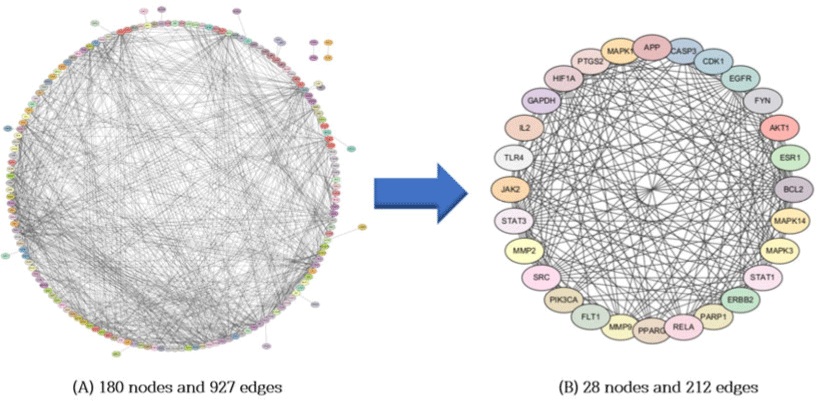
山楂와 건선 간의 공통 표적 단백질 180개를 기반으로 PPI 네트워크를 구축한 결과, 해당 네트워크는 총 180개의 노드와 927개의 엣지로 구성되었다. 중심성 분석을 통해 네트워크 내에서 중요한 역할을 하는 유전자를 선별하였다.

선별 기준은 Degree(11.03571429), Eigenvector(0.049292907), Betweenness(291.904762), Closeness(0.144853433)의 4개 지표에 대해 각각의 평균값을 임계치(Cut-off)로 설정하였으며, 이를 모두 상회하는 28개의 핵심 유전자를 최종 도출하였다: STAT3, EGFR, AKT1, SRC, BCL2, HIF1A, STAT1, GAPDH, JAK2, PTGS2, PIK3CA, ESR1, ERBB2, CASP3, MAPK3, MAPK1, TLR4, MMP9, PPARG, MAPK14, FYN, RELA, IL2, PARP1, APP, MMP2, CDK1, FLT1 (Fig. 2).
jkmood-39-2-1-g2
Fig. 2. Visual Representation of the PPI Network for Shared Targets (A) and the Identification of Hub Genes Through Topological Characterization (B)
Download Original Figure
5. 생물학적 기능 및 경로 분석 (GO 및 KEGG Pathway)

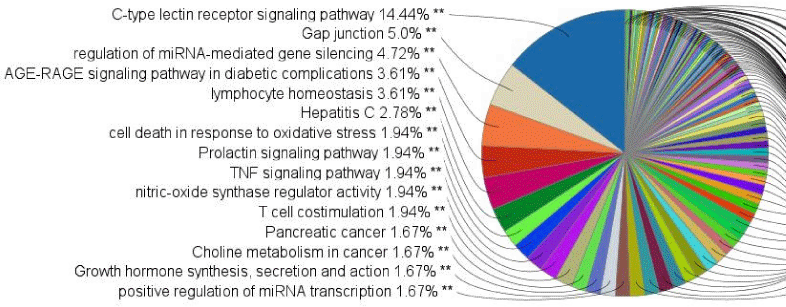
山楂–건선 간의 핵심 유전자 28개를 대상으로 생물학적 기능 및 관련 신호 경로를 분석한 결과, ClueGO 분석에서는 C형 렉틴 수용체 신호 전달 경로, 당뇨병 합병증 내 AGE-RAGE 신호 전달, 산화 스트레스에 의한 세포 사멸, 프로락틴 신호 경로 등이 유의미한 기전으로 도출되었다(Fig. 3).
jkmood-39-2-1-g3
Fig. 3. ClueGO Functional Enrichment Map Showing the Distribution of Significantly Enriched Pathways Among Core Genes Shared Between Crataegi Fructus and Psoriasis.
Download Original Figure

한편, Enrichr의 Gene Ontology Biological Process 분석에서는 세포 표면 수용체 단백질 티로신 키나아제 신호 전달 경로, 상피세포 성장인자 수용체(EGFR) 신호 경로, Erb-B2 수용체 티로신 키나아제(ERBB) 신호 전달 경로 등이 유의한 생물학적 과정으로 확인되었다(Table 2).

Table 2. Functional Categorization of Key Overlapping Genes Between Crataegi Fructus and Psoriasis via Gene Ontology (GO) Biological Process Analysis
Index Name P-value Adjusted p-value Odds Ratio Combined score
1 Cell Surface Receptor Protein Tyrosine Kinase Signaling Pathway (GO:0007169) 5.92E-19 6.66E-16 69.82 2930.5
2 Protein Phosphorylation (GO:0006468) 3.45E-14 1.94E-11 40.74 1262.92
3 Epidermal Growth Factor Receptor Signaling Pathway (GO:0007173) 3.86E-13 1.45E-10 158.17 4521.28
4 ERBB Signaling Pathway (GO:0038127) 1.34E-12 3.01E-10 130.2 3559.68
5 Peptidyl-Tyrosine Phosphorylation (GO:0018108) 1.34E-12 3.01E-10 130.2 3559.68
6 Regulation of miRNA Transcription (GO:1902893) 3.44E-12 6.45E-10 112.5 2969.53
7 Positive Regulation of Cytokine Production (GO:0001819) 1.13E-11 1.82E-09 34.67 873.79
8 Positive Regulation of Intracellular Signal Transduction (GO:1902533) 2.46E-11 3.45E-09 22.65 553.43
9 Regulation of Nitric Oxide Biosynthetic Process (GO:0045428) 3.33E-11 3.93E-09 139.39 3362.93
10 Regulation of Inflammatory Response (GO:0050727) 3.49E-11 3.93E-09 38.94 937.68
Download Excel Table

또한 Enrichr의 KEGG pathway 분석 결과, 저산소 유도 인자-1 신호 경로(HIF-1 signaling pathway), 당뇨 합병증에서의 AGE-RAGE 신호 전달, 지질 및 동맥경화(Lipid and atherosclerosis) 경로 등이 주요 경로로 도출되었다(Table 3).

Table 3. Signaling Pathway Profiling of Core Intersecting Genes Between Crataegi Fructus and Psoriasis via KEGG Database Analysis
Index Name P-value Adjusted p-value Odds Ratio Combined score
1 PATHWAYS IN CANCER 3.69E-24 6.91E-22 81.22 4381.99
2 PROTEOGLYCANS IN CANCER 1.55E-23 1.45E-21 125.46 6589.43
3 HIF-1 SIGNALING PATHWAY 7.07E-23 4.41E-21 177.58 9057.06
4 HEPATITIS B 9.80E-23 4.58E-21 134.86 6834.46
5 PD-L1 EXPRESSION AND PD-1 CHECKPOINT PATHWAY IN CANCER 6.92E-22 2.59E-20 196.34 9566.22
6 AGE-RAGE SIGNALING PATHWAY IN DIABETIC COMPLICATIONS 3.51E-21 1.09E-19 169.47 7981.66
7 LIPID AND ATHEROSCLEROSIS 5.90E-21 1.58E-19 98.86 4604.92
8 PROLACTIN SIGNALING PATHWAY 7.31E-21 1.71E-19 222.16 10300.72
9 KAPOSI SARCOMA-ASSOCIATED HERPESVIRUS INFECTION 1.58E-19 3.28E-18 94.24 4079.68
10 TOXOPLASMOSIS 1.49E-18 2.79E-17 131.22 5386.28
Download Excel Table
6. Herb-Compound-Target-Pathway을 통한 山楂의 건선 치료 기전 분석

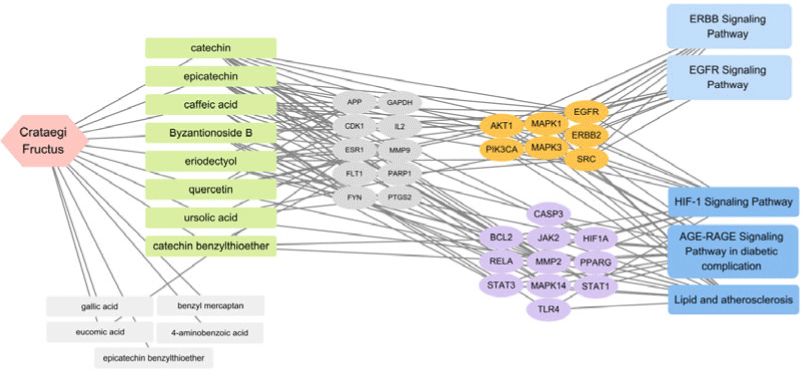
구축된 Herb–Compound–Target–Pathway 네트워크에서 각 화합물의 연결 정도(Degree)를 분석한 결과, 산사의 주요 유효 성분인 catechin과 epicatechin이 각각 12개의 노드와 연결되어 가장 높은 값을 보였다. 또한 caffeic acid 역시 11개의 표적 유전자와 연결되어, 네트워크 중심성이 높은 물질로 확인되었다.

Target–Pathway 분석을 위해, 본 연구에서는 pathway를 두 개의 주요 축으로 구분하여 분석하였다. 첫 번째 축은 상피세포 성장인자 수용체(EGFR) 및 Erb-B2 수용체 티로신 키나아제(ERBB) 신호 전달 경로를 포괄하며, 이는 성장인자에 의한 신호 전달과 세포 증식 조절 기전을 대변하는 핵심 경로 군으로 설정되었다. 두 번째 축은 저산소 반응, 염증 신호 전달 및 지질 대사 조절을 대변하는 경로 군으로 구성되었다. 여기에는 저산소 유도 인자-1(HIF-1) 신호 전달 체계를 비롯하여, 당뇨 합병증 기전 내의 AGE-RAGE signaling 및 지질과 동맥경화(Lipid and atherosclerosis) 관련 경로들이 포함된다. 이들 두 축에 공통되는 핵심 유전자군으로는 AKT1, PIK3CA, MAPK1, MAPK3, EGFR, ERBB2, SRC가 확인되었다. 또한, 두 번째 축에는 공통 핵심 유전자군에 더해 BCL2, RELA, STAT3, CASP3, JAK2, MMP2, MAPK14, TLR4, HIF1A, PPARG, STAT1이 연결되었다(Fig. 4).
jkmood-39-2-1-g4
Fig. 4. Integrated Herb–Compound–Target–Pathway Interaction Network for Crataegi Fructus. The pink hexagon represents the herb. Green rectangles indicate bioactive compounds connected to target genes, whereas gray rectangles represent compounds not linked to any target genes. Blue rectangles denote key pathways. Elliptical nodes represent target genes, color-coded by pathway association: orange (genes connected to both major pathway axes), purple (genes connected exclusively to the secondary pathway axis, including the HIF-1, AGE-RAGE, and lipid and atherosclerosis pathways), and gray (genes not associated with either pathway axis).
Download Original Figure

Ⅳ. 고찰 (Discussion)

네트워크 약리학은 한의학의 다성분–다표적 특성을 체계적으로 해석할 수 있는 연구 패러다임으로, 약물–질병–표적 간 상호작용을 규명하여 개인맞춤형 정밀 의료에 기여할 수 있다16). 실제로 이러한 접근은 COVID-19와 같은 신종 감염병 상황에서 한약 처방의 유효 성분과 작용 기전을 해석하는 데 활용되어 임상 적용을 뒷받침하는 근거로 제시되었다16). 또한, 기존 약물의 새로운 적응증을 탐색하는 약물 재창출(Drug repurposing) 전략 측면에서도 활용 가능성을 가진다17).

본 연구에서는 네트워크 약리학적 접근을 통해 山楂가 심상성 건선에 작용하는 잠재적 기전을 분석하였다. 山楂의 13개의 활성 성분으로부터 예측된 표적 단백질과 건선 관련 유전자 간 교집합 분석을 통해 180개의 공통 표적을 도출하였으며, PPI 네트워크 중심성 분석을 통해 28개의 핵심 유전자를 확인하였다.

Herb–Compound–Target 네트워크 분석 결과, 山楂의 주요 성분인 catechin, epicatechin, caffeic acid은 다수의 표적 단백질과 연결되며 높은 네트워크 중심성을 나타냈다. Catechin 계열 성분은 TNF-α 자극 조건에서 ROS 생성을 억제하고 MAPK/Akt 및 JNK 신호를 조절함으로써 염증 매개 인자 발현과 세포 손상을 완화하는 것으로 보고되었다18,19). 또한 caffeic acid는 건선 각질형성세포에서 EGR1–CHAC1 축을 조절하여 ferroptosis 및 염증 반응을 감소시킨다20). 이러한 연구 결과는 山楂의 주요 성분이 산화 스트레스 및 염증 반응과 관련된 세포 내 신호 경로에 관여할 가능성을 시사한다.

본 연구에서 도출된 핵심 표적 중 JAK2와 STAT3는 전염증성 사이토카인에 의해 활성화되어 각질형성세포의 비정상적인 과증식과 염증 반응을 촉진하는 주요 경로로 알려져 있다10). 또한, 항아폽토시스 단백질인 BCL2 계열의 과발현과 세포 사멸 실행 인자인 CASP3의 조절 실패는 각질형성세포의 사멸을 저해하고 병변 내 세포 생존을 비정상적으로 연장시키는 주요 기전이다21).

Target–Pathway 분석에서 山楂의 작용 기전은 두 개의 주요 신호 축으로 구분된다. 첫 번째 축은 EGFR 및 ERBB signaling pathway로, 성장인자에 의해 매개되는 세포 증식 신호와 각질형성세포의 과도한 증식 및 염증 반응과 관련된 경로이다. EGFR 신호의 과활성화는 건선 병변에서 표피의 과증식과 비후를 유도하며, IL-17A 등 염증성 사이토카인에 의해 강화되어 건선 특이적 유전자 발현을 증폭시킨다22,23). 또한, ERBB 계열 중 ERBB4와 miR-193b-3p 축의 불균형은 각질형성세포의 과도한 증식과 염증 매개체 생성을 촉진하는 것으로 보고되었다24). 한편, KEGG 분석 결과 ‘Pathways in cancer’ 및 ‘Proteoglycans in cancer’ 등 암 관련 경로가 상위에 도출된 것은, 건선의 병태 형성에 관여하는 STAT1, STAT3 및 세포 주기 조절 유전자들이 암세포의 과증식 및 항아폽토시스 기전과 분자적 네트워크를 공유하기 때문으로 해석된다25).

두 번째 축은 HIF-1 signaling, AGE-RAGE signaling, 및 Lipid and atherosclerosis 경로로 구성되며, 이는 건선이 단순한 피부 질환을 넘어 전신적인 대사 이상 및 염증과 긴밀하게 연결됨을 시사한다. 저산소(Hypoxia) 반응에서 핵심적인 역할을 하는 HIF-1α는 건선 병변에서 발현이 증가하며, CD147과 GLUT1의 상향 조절을 통해 각질형성세포의 당분해(Glycolysis)를 촉진함으로써 병변의 과도한 증식을 유도한다26). 또한 HIF-1α는 IL-6, VEGF 및 활성산소(ROS)와 상호작용하여 혈관 신생을 촉진하고 피부 염증을 심화시킨다27).

당 대사 이상과 관련된 AGE-RAGE 신호 전달은 최종당화산물(AGEs)이 그 수용체인 RAGE와 결합하며 활성화된다. AGE-RAGE 결합은 NF-κB (RELA)를 활성화하고 ROS 생성을 촉진하여 산화 스트레스와 염증 관련 유전자 발현을 증가시킨다28). 이 경로는 p38 MAPK(MAPK14), PKC, ERK 등의 신호와 교차하여 염증 반응을 증폭시키며, 당뇨병 등 대사 질환에서 관찰되는 혈관 합병증 및 전신 염증과 관련된다29). 이때 유발된 산화 스트레스는 건선의 염증 반응을 증폭시키는 핵심 경로이며, 山楂의 quercetin, epicatechin 등 폴리페놀 성분이 지닌 ROS 소거 능력이 이 경로를 조절하여 대사-염증 연쇄 반응을 차단할 수 있다11,28).

건선과 동맥경화증은 공통된 지질–염증 신호 축을 공유하는 것으로 보고되며30), 이러한 건선의 대사적 특성은 염증 반응의 지속과 만성화에 관여한다. 山楂의 주요 성분은 ADIPOQ-AMPK-CPT1 축을 통해 지방산 산화를 촉진하고 염증 반응을 조절함으로써31), 지질 대사와 염증 신호에 공통적으로 개입할 수 있다.

본 연구에서 확인된 두 개의 주요 신호 축을 바탕으로, 건선은 단순한 표피 증식 질환이 아닌 성장인자 신호와 대사–염증 신호가 동시에 작용하는 네트워크 질환으로 사료된다. 특히 HIF-1, AGE–RAGE, lipid and atherosclerosis 경로는 건선 병태가 저산소 반응, 산화 스트레스, 지질 대사 이상과 연결되어 있음을 보여주며, 이는 건선이 단순한 국소 피부 병변이 아닌 전신 염증 및 대사 질환과 관련된다는 최근의 관점과 일치한다32).

山楂는 消食健胃, 行氣散瘀 효능을 지닌 약재33)로, 식적과 어혈과 관련된 소화기 및 순환기 병증에 활용되어 왔다. 이러한 본초학적 효능은 현대 연구에서 보고된 지질 대사 조절 및 항동맥경화 작용과도 관련된다9,34). 山楂 추출물은 지방산 산화를 촉진하고 혈중 총콜레스테롤, 중성지방 및 LDL 수치를 감소시키며12,35), 山楂의 flavonoids 및 triterpenoids 성분은 최종당화산물(AGEs) 형성을 억제하여 산화 스트레스와 염증 반응을 조절한다36).

본 연구는 네트워크 약리학 분석을 통해 山楂와 심상성 건선이 공유하는 공통 표적 및 신호 경로를 체계적으로 도출하였다. 특히 EGFR/ERBB 축과 HIF-1, AGE–RAGE, lipid and atherosclerosis 경로의 확인은 건선을 단순한 피부 국소 질환이 아닌, 증식 신호와 대사–염증 축이 교차하는 면역–대사 네트워크 질환으로 이해하는 최근의 병태생리학적 관점과 일치한다. 이러한 결과는 山楂의 다성분–다표적 특성이 건선의 증식 및 대사–염증 신호 네트워크에 동시에 관여할 수 있음을 제시하였다는 점에서 의의를 가진다.

다만 본 연구는 공개 데이터베이스를 활용한 네트워크 약리학 분석으로, 도출된 표적 단백질과 신호 경로는 예측 결과에 기반한다는 한계가 있다. 또한, GeneCards 단일 DB 활용에 따른 선택 편향을 보완하기 위해, 차후 연구에서는 OMIM, DisGeNET 등을 추가한 다각적인 유전자 수집과 검증이 필요하다. 아울러 주요 성분과 표적 간의 결합 친화성을 확인하기 위한 분자 도킹 및 분자 동역학 시뮬레이션 과정이 생략된 바, 향후 이에 대한 보완 연구가 수행되어야 한다. 본 연구에서 제시된 증식 및 대사염증 신호 축은 하나의 기전적 가능성으로 이해되어야 하며, 실제 山楂의 약리학적 작용과 건선 치료 효과에 대해서는 향후 세포 및 동물 실험을 통한 검증이 필요하다.

Ⅴ. 결론 (Conclusion)

  1. 본 연구에서는 네트워크 약리학 분석을 통해 山楂의 활성 성분 13개로부터 총 317개의 잠재적 표적 단백질을 예측하였으며, 이 중 180개는 심상성 건선 관련 유전자와 공통으로 확인되었다. 이후 PPI 네트워크 분석을 통해 28개의 핵심 유전자를 도출하였다.

  2. Herb–Compound–Target 분석 결과, catechin, epicatechin, caffeic acid가 높은 연결성을 나타냈으며, 이들 성분은 산화 스트레스 조절, 세포 증식 억제 및 염증 반응 조절과 관련된다.

  3. 경로 분석에서는 첫째로 EGFR/ERBB 신호 축과 둘째로 HIF-1, AGE–RAGE, Lipid and atherosclerosis 신호 축이 도출되었다. 이는 山楂가 각질형성세포 증식 조절과 면역 반응 뿐 아니라, 지질 대사 및 산화 스트레스 관련 기전에 동시에 관여할 수 있음을 시사한다.

  4. 지질 대사 및 산화 스트레스 관련 경로의 도출은 건선을 면역–대사 교차 질환으로 이해하는 최근의 병태생리학적 관점과 부합하며, 山楂는 건선의 전신적 대사–염증 환경을 조절하는 후보 약물로 생각된다.

  5. 본 연구는 데이터베이스 기반의 in silico 분석으로 수행된 탐색적 연구이며, 향후 세포 및 동물 실험과 임상 연구를 통해 제시된 분자 기전과 치료적 유효성을 검증할 필요가 있다.

References

1.

Sieminska I, Pieniawska M, Grzywa TM. The immunology of psoriasiscurrent concepts in pathogenesis. Clinical reviews in allergy & immunology. 2024;66(2):164–91. .

2.

Sarandi E, Krueger-Krasagakis S, Tsoukalas D, Sidiropoulou P, Evangelou G, Sifaki M, et al. Psoriasis immunometabolism: progress on metabolic biomarkers and targeted therapy. Frontiers in molecular biosciences. 2023;10:1201912. .

3.

Alajroush WA, Alrshid AI, Alajlan AH, Alsalamah YB, Alhumaidan MI, Alhoumedan AI, et al. Psoriasis and metabolic disorders: a comprehensive meta-analysis of million adults worldwide. Cureus. 2024:16(1):e52357. .

4.

Hao Y, Zhu Yj, Zou S, Zhou P, Hu Yw, Zhao Qx, et al. Metabolic syndrome and psoriasis: mechanisms and future directions. Frontiers in immunology. 2021;12:711060. .

5.

Mikhaylov D, Hashim PW, Nektalova T, Goldenberg G. Systemic psoriasis therapies and comorbid disease in patients with psoriasis: a review of potential risks and benefits. The Journal of clinical and aesthetic dermatology. 2019;12(6):46-54.

6.

Cho EC, Kim KS. A Review on Patterns and Classification Criteria of Psoriasis by analyzing Chinese Theses. J Korean Med Ophthalmol Otolaryngol Dermatol. 2020;33(2):112–29.

7.

Su Y, Qin W, Wu L, Yang B, Wang Q, Kuang H, et al. A review of Chinese medicine for the treatment of psoriasis: principles, methods and analysis. Chinese Medicine. 2021;16(1):138. .

8.

Kang DW, Heo C, Kim JD, Kim KS, Kim YB. A Proposal and Considerations for Treatment Approaches of Psoriasis. J Korean Med Ophthalmol Otolaryngol Dermatol. 2020;33(3):99–114.

9.

Li R, Luan F, Zhao Y, Wu M, Lu Y, Tao C, et al. Crataegus pinnatifida: A botanical, ethnopharmacological, phytochemical, and pharmacological overview. Journal of Ethnopharmacology. 2023;301:115819. .

10.

Wu P, Liu Y, Zhai H, Wu X, Liu A. Rutin alleviates psoriasis‐related inflammation in keratinocytes by regulating the JAK2/STAT3 signaling. Skin Research and Technology. 2024;30(8):e70011. .

11.

Zhang J, Chai X, Zhao F, Hou G, Meng Q. Food applications and potential health benefits of hawthorn. Foods. 2022;11(18):2861. .

12.

Wang J, Xiong X, Feng B. Effect of crataegus usage in cardiovascular disease prevention: An evidence-based approach. Evidence-Based Complementary and Alternative Medicine. 2013;2013(1):149363. .

13.

Nazhand A, Lucarini M, Durazzo A, Zaccardelli M, Cristarella S, Souto SB, et al. Hawthorn (Crataegus spp.): An updated overview on its beneficial properties. Forests. 2020;11(5):564. .

14.

Daina A, Michielin O, Zoete V. SwissADME: a free web tool to evaluate pharmacokinetics, drug-likeness and medicinal chemistry friendliness of small molecules. Scientific reports. 2017;7(1):42717. .

15.

Zhang W, Zhang Y, Li J, Tang J, Wu J, Xie Z, et al. Identification of metabolites from the gut microbiota in hypertension via network pharmacology and molecular docking. Bioresources and Bioprocessing. 2024;11(1):102. .

16.

Li L, Yang L, Yang L, He C, He Y, Chen L, et al. Network pharmacology: a bright guiding light on the way to explore the personalized precise medication of traditional Chinese medicine. Chinese medicine. 2023;18(1):146. .

17.

Zhai Y, Liu L, Zhang F, Chen X, Wang H, Zhou J, et al. Network pharmacology: a crucial approach in traditional Chinese medicine research. Chinese medicine. 2025;20(1):8. .

18.

Lee S, Yu JS, Phung HM, Lee JG, Kim KH, Kang KS. Potential anti-skin aging effect of (-)-Catechin isolated from the root bark of ulmus davidiana var. japonica in tumor necrosis factor-α-stimulated normal human dermal fibroblasts. Antioxidants. 2020;9(10):981. .

19.

Wu WB, Chiang HS, Fang JY, Chen SK, Huang CC, Hung CF. (+)-Catechin prevents ultraviolet B-induced human keratinocyte death via inhibition of JNK phosphorylation. Life sciences. 2006;79(8):801–7. .

20.

Li Y, Zhou X, Yang Z, Zhang L, Yang X, Wei A. Caffeic acid reduces ferroptosis to dampen inflammation of keratinocytes in psoriasis by inhibiting EGR1-induced transcription activation of CHAC1. Current Molecular Medicine. 2025;25(7):859–70. .

21.

Wang B, Han D, Li F, Hou W, Wang L, Meng L, et al. Elevated IL-22 in psoriasis plays an anti-apoptotic role in keratinocytes through mediating Bcl-xL/Bax. Apoptosis. 2020;25(9):663–73. .

22.

Wang S, Zhang Z, Peng H, Zeng K. Recent advances on the roles of epidermal growth factor receptor in psoriasis. American journal of translational research. 2019;11(2):520.

23.

Dai X, Murakami M, Shiraishi K, Muto J, Tohyama M, Mori H, et al. EGFR ligands synergistically increase IL-17A-induced expression of psoriasis signature genes in human keratinocytes via IκBζ and Bcl3. European Journal of Immunology. 2022;52(6):994–1005. .

24.

Huang C, Zhong W, Ren X, Huang X, Li Z, Chen C, et al. MiR-193b-3p–ERBB4 axis regulates psoriasis pathogenesis via modulating cellular proliferation and inflammatory-mediator production of keratinocytes. Cell Death & Disease. 2021;12(11):963. .

25.

Dorai S, Alex Anand D. Differentially expressed cell cycle genes and STAT1/3-driven multiple cancer entanglement in psoriasis, coupled with other comorbidities. Cells. 2022;11(23):3867. .

26.

Wen T, Tingting L, Fangfang L, Cong P, Shuang Z, Xiang C, et al. HIF-1α may promote glycolysis in psoriasis vulgaris via upregulation of CD147 and GLUT1. Journal of Central South University Medical Sciences. 2021;46(4):333-9.

27.

Zhu WJ, Li P, Wang L, Xu YC. Hypoxia-inducible factor-1: A potential pharmacological target to manage psoriasis. International Immunopharmacology. 2020;86:106689. .

28.

Maurelli M, Gisondi P, Girolomoni G. Advanced glycation end products and psoriasis. Vaccines. 2023;11(3):617. .

29.

Kay AM, Simpson CL, Stewart Jr JA. The role of AGE/RAGE signaling in diabetes-mediated vascular calcification. Journal of diabetes research. 2016;2016(1):6809703. .

30.

Chen L, Chen H, Guo S, Chen Z, Yang H, Liu Y, et al. Psoriasis comorbid with atherosclerosis meets in lipid metabolism. Frontiers in pharmacology. 2023;14:1308965. .

31.

Xing J, Li J, Peng A, Wang Y, Yao Y, He Y, et al. ADIPOQ regulates lipid metabolism by activating AMPK/CPT-1 pathway to attenuate the proliferation of psoriasis lesions. Scientific Reports. 2025:15(1):1234. .

32.

Tashiro T, Sawada Y. Psoriasis and systemic inflammatory disorders. International journal of molecular sciences. 2022;23(8):4457. .

33.

Korea Institute of Oriental Medicine. OASIS Herbal Medicine Information System: Crataegi Fructus [Available from: https://oasis.kiom.re.kr/oasis/herb/monoDetailView_M02.jsp?idx=193&tab=2&keyword=%EC%82%B0%EC%82%AC&work_seq=null&srch_menu_nix=null]

34.

Wu M, Liu L, Xing Y, Yang S, Li H, Cao Y. Roles and mechanisms of hawthorn and its extracts on atherosclerosis: a review. Frontiers in pharmacology. 2020;11:118. .

35.

Wu J, Peng W, Qin R, Zhou H. Crataegus pinnatifida: chemical constituents, pharmacology, and potential applications. Molecules. 2014;19(2):16857-71. .

36.

Chowdhury S, Islam M, Jung H, Choi J. In vitro antidiabetic potential of the fruits of Crataegus pinnatifida. Research in pharmaceutical sciences. 2014;9(1):11–22.